

Skip to content

Fundamentals · worked examples · decision guides

Understand the decision before you calculate.

Thirty practical, visual guides explain each topic, work through the numbers, and compare realistic choices before you use the connected calculator.

Three complementary series

Learn the method, follow the numbers, compare the choices

Each calculator topic is one compact path: a fundamental explains the model, a worked example traces one scenario, and a decision guide tests alternatives and trade-offs.

Fundamental · 10 min

How to Make a Monthly Budget That Works in Real Life

Build a realistic monthly budget from take-home income, irregular costs, savings, and debt payments—without relying on a percentage rule that does not fit.
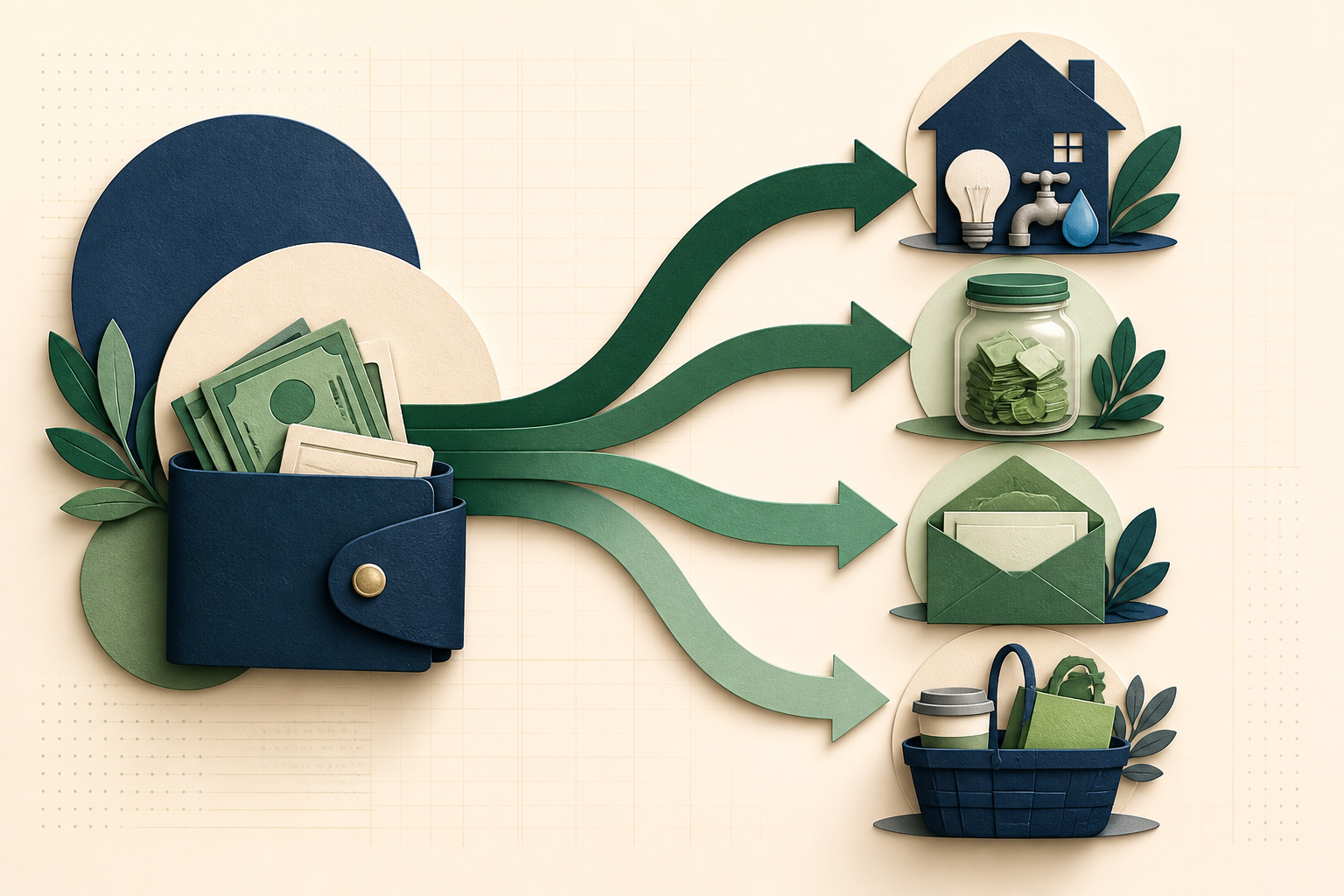
Household income flowing into essentials, savings, debt payments, and flexible spending

Worked example · 12 min

Monthly Budget Example: How a $6,500 Household Income Gets Allocated

Follow a complete $6,500 household budget from three income sources through fixed costs, flexible spending, savings, a cash-flow deficit, and a realistic revision.

Editorial household budget scene with income tiles arranged across essential costs, flexible spending, and savings jars

Decision guide · 14 min

50/30/20 vs. Zero-Based Budgeting: Which Approach Fits Your Cash Flow?

Compare 50/30/20 targets, zero-based allocation, and a practical category budget using the same $7,200 household cash flow.

One household cash flow branching into a balance scale, three budgeting envelopes, and a flexible category ledger
Financial foundationsOpen Monthly Budget

Fundamental · 9 min

What Is Net Worth and What Should You Include?

Learn what belongs in a personal net worth statement, how to value difficult assets, and why liquid net worth and long-term direction matter.

A balance scale comparing household assets with mortgage, education, auto, and credit card liabilities

Worked example · 13 min

Net Worth Calculation Example: Assets, Debts, and Home Equity

Build a household balance sheet with cash, investments, retirement accounts, a home, a mortgage, and other debts, then model a cautious one-year change.

Editorial balance-sheet scene pairing a home and investment assets with mortgage, auto, student, and card debts

Decision guide · 14 min

Net Worth vs. Liquid Net Worth: Which Number Matters for Your Decision?

Use one household balance sheet to compare total net worth, liquid net worth, home equity, and short-term financial flexibility.

A wealth cabinet separating accessible cash and investments from a home and retirement assets behind another layer
Financial foundationsOpen Net Worth

Fundamental · 10 min

How Much Emergency Fund Do You Really Need?

Choose a practical emergency-fund range from essential expenses, household income risk, dependents, deductibles, and access needs.

A household and essential supplies protected by layered emergency reserves through a passing storm

Worked example · 12 min

Emergency Fund Example: Building a Six-Month Cash Reserve

See how $4,010 of essential monthly costs becomes a six-month reserve target, then compare a steady savings plan with a focused accelerated plan.

Editorial emergency reserve scene with six protective cash layers sheltering a household and essential bills

Decision guide · 15 min

3 vs. 6 vs. 12 Months of Expenses: How Large Should an Emergency Fund Be?

Compare 3-, 6-, 9-, and 12-month reserve targets from the same essential expenses, current savings, and monthly contribution.

A household protected by four progressively larger nested reserve shields representing layered emergency targets
Debt and resilienceOpen Emergency Fund

Fundamental · 11 min

Debt Snowball vs. Debt Avalanche: Which Pays Off Faster?

Compare snowball and avalanche payoff orders using the same monthly debt budget, including payoff time, interest, and behavioral tradeoffs.

Two debt payoff paths—smallest balance first and highest rate first—climbing toward the same debt-free summit

Worked example · 14 min

Debt Payoff Example: Snowball vs. Avalanche With Four Debts

Compare snowball and avalanche schedules for four debts using the same $1,500 monthly budget, then measure the effect of another $250 per month.

Editorial tabletop with four debt blocks moving through two distinct payoff sequences toward a clear finish

Decision guide · 16 min

Pay Off Debt or Build an Emergency Fund First? A Practical Comparison

Compare debt-first, reserve-first, and split strategies with the same debts, starting cash buffer, and $600 monthly cash flow.

A stream of cash reaching a fork between falling debt blocks and a growing protective reserve before the paths reconnect
Debt and resilienceOpen Debt Payoff

Fundamental · 11 min

Is Debt Consolidation Worth It? How to Find Your Break-Even Rate

Compare consolidation offers by total cost, term, fees, payment, and break-even APR—not by the advertised monthly payment alone.

Several debts merging at a consolidation bridge with a shorter route and a longer fee-charging route

Worked example · 13 min

Debt Consolidation Example: Comparing Two Loan Offers

Compare current debts with two consolidation offers, including APR, origination fees, monthly payment, payoff term, total cost, and break-even rate.

Editorial loan comparison desk with current debts and two offer folders balanced against fees, payments, and time

Decision guide · 15 min

Is Debt Consolidation Worth It? APR, Fees, Payment, and Term Compared

Test three consolidation offers against one current payoff plan to separate lower monthly payment from lower total cost.

Three consolidation routes toward one goal including a direct path, a longer staircase, and a path obstructed by a fee stone
Debt and resilienceOpen Debt Consolidation

Fundamental · 10 min

How Much Should You Save Each Month to Reach a Financial Goal?

Turn a target amount and deadline into a realistic monthly savings plan, then test the effects of time, starting balance, and expected return.

Monthly deposits and investment growth following several timelines toward a home down-payment goal

Worked example · 12 min

Savings Goal Example: How to Save for a $60,000 Down Payment

Turn a $60,000 down-payment target and $12,000 starting balance into monthly contributions across three-, five-, and seven-year timelines.

Editorial down-payment scene with three savings paths of different lengths converging on a house key

Decision guide · 14 min

Save More Each Month or Extend the Deadline? Comparing Savings Goal Trade-Offs

Compare four practical levers for a $36,000 savings goal: monthly deposits, time, starting cash, and a lower target.

Four savings levers—steps, calendar tiles, a starting platform, and a longer path—leading toward the same goal

Fundamental · 11 min

How Much Should You Save for College? A Practical Planning Guide

Estimate future four-year college costs, choose a funding percentage, and balance current savings, contributions, investment return, and uncertainty.

A college savings nest feeding four rising academic-year layers topped by a graduation cap

Worked example · 13 min

College Savings Example: Planning for Four Years of Future Costs

Project four years of college costs for an eight-year-old, then compare the monthly funding required for 50%, 75%, and 100% of the future target.

Editorial college planning scene with four rising academic-year platforms funded by savings and growth

Decision guide · 15 min

Save 50%, 75%, or 100% of Future College Costs? Comparing Funding Targets

Compare the monthly contribution and unfunded share for 50%, 75%, and 100% college funding targets in one family scenario.

A family considering three graduation-cap terraces filled to progressively higher college funding levels

Fundamental · 12 min

Are You on Track for Retirement? The Numbers That Matter

Connect retirement savings and contributions to future spending, other income, inflation, projected balance, and a sustainable withdrawal plan.

A retirement nest egg crossing a contribution bridge toward a future portfolio and income-covered home

Worked example · 14 min

Retirement Readiness Example: Finding and Closing an Income Gap

Trace a 43-year-old household from current accounts and contributions to projected retirement income, then test a higher contribution and later retirement date.

Editorial retirement scene with present-day accounts crossing an income-gap bridge toward a future household

Decision guide · 16 min

Save More or Retire Later? Comparing Ways to Close a Retirement Gap

Compare higher contributions, a later retirement date, and moderately lower planned spending against one retirement baseline.

Two people crossing a retirement gap by contribution steps and a longer time bridge, with a third lower-spending path below

Fundamental · 12 min

What Is Your FIRE Number? Understanding the 25× Rule

Calculate a spending-based FIRE target, understand the 25× rule, and test how withdrawal rate, contributions, returns, and inflation affect the timeline.

A growing investment path approaching nested FIRE spending targets with a retirement horizon continuing beyond

Worked example · 14 min

FIRE Number Example: How Spending Changes the Path to Financial Independence

Calculate three spending-based FIRE targets for one household, follow its portfolio path, and test how spending, contributions, and withdrawal rate change the result.

Editorial financial-independence scene with three spending horizons and a portfolio path marked by contributions and growth

Decision guide · 16 min

Cut Spending or Invest More? Comparing the Fastest Paths to a FIRE Number

Compare a sustainable spending reduction, an equal contribution increase, a combined change, and withdrawal-rate sensitivity.

Two routes up a financial independence mountain, one carrying a lighter spending load and one powered by larger contributions
Retirement planningOpen FIRE

Fundamental · 11 min

How Much Life Insurance Do You Need? A Needs-Based Approach

Estimate a household coverage gap from immediate obligations, income replacement, education, existing assets, survivor income, and current coverage.

A household protected by an umbrella while mortgage, income, education, and reserve needs are offset by available resources

Worked example · 14 min

Life Insurance Needs Example: Calculating a Family’s Coverage Gap

Build a needs-based family coverage estimate from immediate obligations, income replacement, education, existing savings, and current insurance.

Editorial family protection scene stacking mortgage, income, education, and reserve needs against available resources

Decision guide · 16 min

Income Multiple vs. Needs-Based Life Insurance: Comparing Coverage Estimates

Compare 5× income, 10× income, and a needs-based estimate that accounts for obligations, future support, and existing resources.

Simple income-multiple blocks balanced against a needs-based family shield containing home, education, and savings symbols